
AEMC draft charger rule: what it covers before you take a side
The AEMC's draft rule covers public kerbside and regional chargers under one federal program. Here's what's proposed and what's disputed.

Tesla's name was on the 7 October letter, and for a lot of people that settled it. One camp backs the company, the other backs the regulator. Not many on either side had read what the Australian Energy Market Commission actually proposed.
Here's a made-up example to keep it concrete. A driver lives on the Sunshine Coast and heads inland a few times a year. They know the one stretch where the next fast charger is a long way off, and they plan every trip around it. The AEMC's draft rule is about who pays to fill gaps like that one. It isn't about the charger in that driver's garage.
Submissions close on 5 November. Before you pick a side, this is what's on the table.
What the AEMC's draft rule actually covers
The Driven reports that on 24 September 2026 the AEMC released a draft determination under the Commonwealth's Accelerating EV Charging Program. The rule lets participating distribution networks help deliver kerbside and regional chargers, then recover part of the cost through network charges.
The term matters. Distribution networks run the poles and wires in your area. They aren't the retailer whose logo is on your bill. Under the draft, a network that takes part could build public chargers and recover some of the cost the same way it recovers the cost of the rest of its network.
Here's the scope, all in one place:
- It's a draft determination, open for comment. The Driven reports submissions close on 5 November 2026.
- A final determination is due by the end of 2026, also per The Driven.
- It covers chargers built under one federal program. ESD News describes it as time-limited to that program.
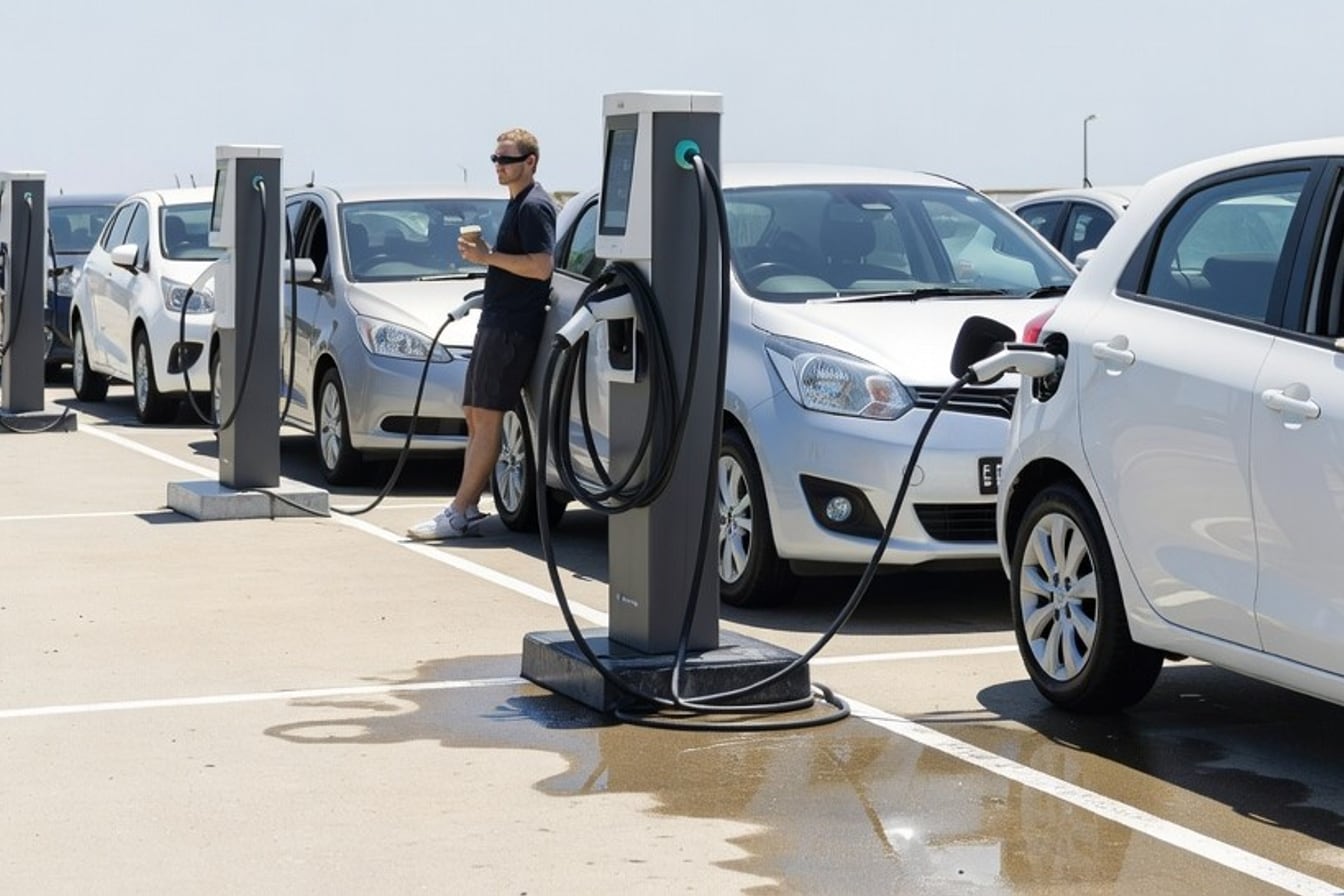
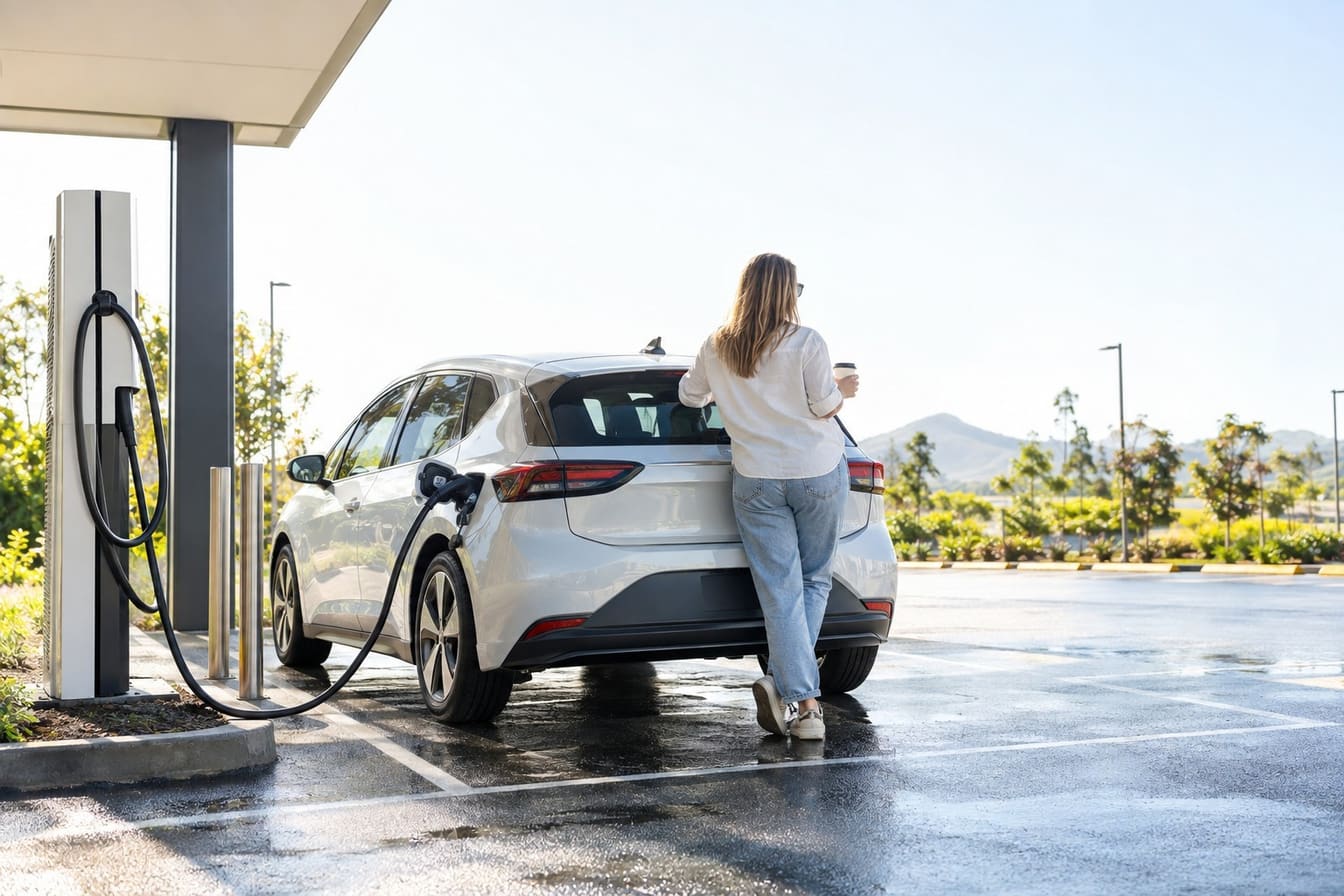
- The chargers in question are public ones, at the kerb and on regional roads.
- Home charging isn't part of it, and nothing has been added to anyone's bill.
That's narrower than most of the commentary suggests. It's one program, one category of charger and one funding question.
Why 13 organisations signed a letter against it
EV Infrastructure News reports that on 7 October 2026, 13 organisations signed an open letter challenging the draft. Tesla, AGL, EnergyAustralia, ENGIE, JOLT, the Australian Energy Council and the Australian Electric Vehicle Association are among them. The Australian Energy Council's own post on the dispute confirms it joined the challenge.
Their argument is specific. They say the evidence doesn't show the rule meets the National Electricity Objective, the test the AEMC's rules are judged against. News Beep reports the signatories point to the AEMC's own analysis, which suggests each charger would need roughly 1.5 to 3.8 extra EV purchases to justify its cost. They question whether that bar can be met.
That's a narrower complaint than the noise around it. Nobody on that list is arguing against public chargers. They're arguing about whether this way of paying for them is backed by the evidence. And the list mixes energy retailers, charging companies, an industry body and an EV association. It doesn't line up neatly with either side of the online argument.
The $1 a year figure, and why it's disputed
Then there's the money. Energy Sorted reports the AEMC's figures: the federal government funds about 30% of eligible costs, and networks recover about 70% from consumers. The AEMC estimates that at about $1 a year on a typical residential bill, for five years.
That's the AEMC's estimate, and nothing more yet. The signatories dispute the evidence behind the rule, and nobody has tested the $1 figure. It could hold up in the final determination or it could change. Anyone telling you it's settled either way is ahead of the process.
There's another gap people skip over. The rule applies to participating networks, and nobody knows yet which networks will take part. So nobody knows whose bill would carry the cost. We'd want that answered before cheering or getting angry.
If you want a say, the submission window is the place for it. The AEMC is taking comment until 5 November, and the final rule is due by the end of the year.
What it means if you drive regional roads
Strip out the politics and the argument is about the gaps between chargers. The rule decides who pays to fill them. It doesn't fill them by the time you leave next weekend. Whatever the AEMC decides in December, you're still planning around the chargers that exist now.
In practice, a regional trip comes down to a few habits:
- Look at the whole route before you leave and find the longest leg between fast chargers. For our purposes that means 50kW DC and up.
- Plan to arrive at each stop with a buffer. We use 15 to 20 percent.
- Charge to around 80 percent per stop rather than waiting for a full battery.
- Know where the next charger is in case your planned one is busy, broken or blocked.
- Check the connector matches your car before you commit to a site, especially if you drive a Nissan Leaf or an import.
You can do all of that by hand with a map and a notepad. Or you can have it done for you.
Charge Nomad won't settle the AEMC argument. What it does, on iPhone and Android, is show you the chargers that exist now and plan your trip around them. The charger map is free, with pins coloured by speed: Standard is up to 50kW, Rapid is 50 to 149kW and Ultra-rapid is 150kW and above. Each charger is matched to the connectors your exact car takes, imports included, and other drivers leave ratings and short notes. The Route Planner is part of Charge Nomad+. You give it your start, destination, car and battery percentage, and it plans stops around a 15 to 20 percent arrival buffer and an 80 percent target per stop. Before you commit to the route it flags the legs where the chargers genuinely aren't there yet, and every stop comes with a backup charger nearby. Stranded mode, the low-battery screen that finds the closest charger you can actually reach, is free.
It doesn't tell you whether a charger is in use or working right now, and no app here should claim to. On iPhone in Australia, Charge Nomad+ is $4.99 a month or $39.99 a year, with a 7 day free trial on the monthly plan. On Android there's a 7 day free trial on the monthly plan and the price is shown in Google Play. Prices vary by country.
See what the app actually does before you download it: evbygenz.com/app
Questions drivers ask
Does the AEMC draft rule add a charge to my electricity bill?
Not yet. It's a draft determination open for comment, and nothing has been added to anyone's bill. Energy Sorted reports the AEMC estimates the cost at about $1 a year on a typical residential bill for five years if it goes ahead, but the signatories to the 7 October letter dispute the evidence behind the rule.
Does the AEMC rule cover home EV chargers?
No. The draft is about public chargers at the kerb and on regional roads, built under the Commonwealth's Accelerating EV Charging Program. The charger in your garage isn't part of it.
When do submissions on the AEMC EV charger rule close?
The Driven reports submissions close on 5 November 2026. A final determination is due by the end of 2026.
Who signed the open letter against the AEMC draft rule?
EV Infrastructure News reports 13 organisations signed it on 7 October 2026, including Tesla, AGL, EnergyAustralia, ENGIE, JOLT, the Australian Energy Council and the Australian Electric Vehicle Association. They argue the evidence doesn't show the rule meets the National Electricity Objective.
// SOURCES
- The Driven: Tackling the black spots, AEMC's imperfect rule change aims to spur rollout of EV chargers
- Energy Sorted: EV chargers on your power bill
- EV Infrastructure News: AGL, Tesla and others challenge AEMC rule letting networks charge consumers for EV chargers
- Australian Energy Council: EV charging, getting the balance right between speed, cost and competition
- News Beep: Signatories question AEMC charger rule
- ESD News: AEMC makes draft determination on EV charging rollout