
PHEV running costs come down to your charging habit
Two drivers with the same plug-in hybrid end up with very different fuel bills. Here's how to work out your own running cost instead of trusting a headline.

The cable in the boot matters more than the badge on the tailgate. We've followed enough plug-in hybrid conversations on the channel to say that plainly.
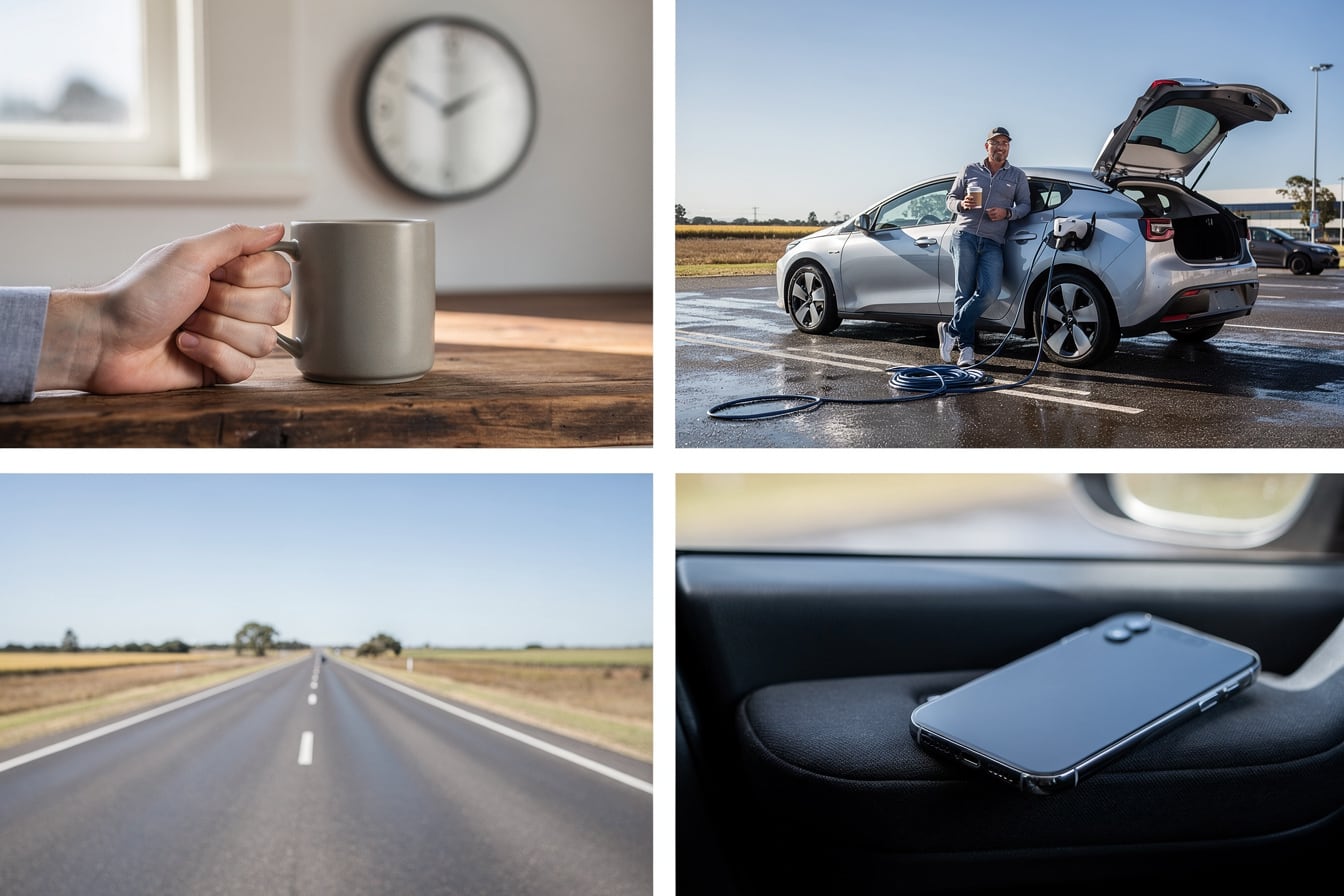
Here's a composite of what we hear. It's not two real people. Two drivers buy the same PHEV. The first has a garage on the Sunshine Coast, plugs in every night, and does the school run and the commute on the battery. Between long weekends the petrol gauge hardly moves. The second rents a unit with street parking and charges when it suits. In practice that's hardly ever, so most weeks the car runs on petrol and carries around a battery it barely uses.
It's the same car, with the same brochure and the same cost-per-100km figure in the dealer's window, and the fuel bills look nothing alike. One of them bought a car that's cheap to run. The other bought a heavier petrol car with a charge cable in the boot.
Why the headline figure only holds if you plug in
PHEV running costs usually get quoted as one tidy number sitting next to a model name. That number assumes a certain share of your driving happens on electricity. The brochure never asks if you'll plug in, how often, or what you'll pay for the power when you do.
That's why comparing PHEVs model against model misses the point. In our view, how you charge does more to your running cost than which PHEV you picked. A buyer weighing up two models over a few dollars per 100 km on paper can wipe that difference out by charging twice a week instead of every night.
None of this makes PHEVs a bad buy. It means the running cost belongs to the driver, not the car, and only the driver can work it out.
What the European data shows
The best real-world data we've found on this comes from Europe, not from here. The International Council on Clean Transportation, an independent research organisation, looked at how plug-in hybrids actually get driven. The share of kilometres driven on electricity came in well below what the official WLTP test assumes. For company cars, where someone else usually pays for the fuel, it was lower again.
A later ICCT study of plug-in hybrids registered in Europe from 2021 to 2023 turned up something less obvious. Electric ranges grew, but the share of distance driven on electricity fell. Real-world fuel use also ran well above the official type-approval figures. A bigger battery didn't change the habit.
We haven't found the same kind of figures for Australia or New Zealand. That gap is the point. Your number isn't in a study. It's in your driveway, or in the fact that you don't have one.
The four numbers behind your PHEV running cost
Whether you're shopping for a PHEV or already own one, get these four things straight before you trust any cost-per-100km figure:
- How much of your driving is electric. Forget the official figure and track your own weeks. Note the odometer at the start and end of a month, and how many of those kilometres the car did on the battery.
- When you charge. On a time-of-use electricity plan, the time of day changes what each kWh costs. ABC News made the same point in August 2026, reporting that the time of day you charge an EV changes its electricity cost per 100 km by a lot.
- What you pay per kWh, at the hours you actually charge. That's on your bill or your retailer's plan.
- What you pay for petrol, at the servo you actually use.
You'll also need the car's own consumption on battery and on petrol. Take those from the trip computer or your own fill-up records, not the brochure. Three of the four numbers above have nothing to do with which model you bought.
Doing the sum with your own figures
The arithmetic is simple. The hard part is being honest about the inputs.
- Take a typical month's kilometres and split them into electric kilometres and petrol kilometres.
- For the electric part, divide the kilometres by 100, multiply by your kWh per 100 km, then multiply by what you pay per kWh at the time you charge.
- For the petrol part, divide the kilometres by 100, multiply by your litres per 100 km, then multiply by your price per litre.
- Add the two, divide by the total kilometres, and multiply by 100. That's your cost per 100 km.
Then run it a second time, once as a nightly charger and once as an occasional one. The gap between those two runs shows you whether a PHEV suits the way you live. If you're buying and you don't have off-street parking, do the second run before you sign anything, not after.
If you're in New Zealand, road user charges belong in any comparison between electric and petrol driving, so put them in as their own line.
Where Charge Nomad fits
You can do all of that on paper, or you can have Charge Nomad do the arithmetic. It's free on iPhone (iOS 17 or later) and Android (Android 8 or later), and Trip Cost and Off-Peak Savings are among the free calculators. They run on the phone, so they still work with no signal, and in New Zealand every EV-versus-petrol comparison shows road user charges as their own line. On iPhone, Running Costs logs your odometer readings and charges to show what the car really costs month by month. For longer mixed trips, the Route Planner has a fuel station mode for petrol and plug-in hybrid driving, using petrol stations from OpenStreetMap, and on iPhone it shows the trip cost stop by stop next to the same drive in petrol.
The Route Planner is part of Charge Nomad+, along with the Range Estimator and room for more than one car in your garage. On iPhone in Australia that's $4.99 a month or $39.99 a year, with a 7 day free trial on the monthly plan. On Android there's a 7 day free trial on the monthly plan and the price is shown in Google Play. Prices vary by country. The charger map, Stranded mode and the other tools are free, most of the app works without an account, there are no ads and no ad or tracking SDKs, and your data is never sold.
One honest limit. No app knows whether you'll pull the cable out of the boot tonight. That part is still up to you.
See what the app actually does before you download it: evbygenz.com/app
If you drive a PHEV, how many nights a week does it actually get plugged in?
Questions drivers ask
Is a plug-in hybrid cheaper to run than a petrol car?
It depends on how much of your driving happens on electricity, and on what you pay for power and petrol. If you plug in nightly and most of your trips fit inside the battery range, most of your kilometres are electric. If you rarely charge, you're driving a petrol car that carries a battery, so run the sum with your own figures before you decide.
How do I work out my PHEV's cost per 100 km?
Split a month's driving into electric and petrol kilometres. Cost the electric part with your kWh per 100 km and your price per kWh, and the petrol part with your litres per 100 km and your price per litre. Add the two, divide by total kilometres and multiply by 100.
Does it matter what time of day I charge a PHEV?
On a time-of-use electricity plan, yes. The time of day sets the price of each kWh, so charging in a cheaper window lowers the electric share of your running cost. Check the hours and rates on your own plan.
Is a PHEV worth buying without home charging?
Only you can answer that, and the sum will tell you. Work out the running cost based on how often you'll realistically plug in, not how often you'd like to. European research from the International Council on Clean Transportation found real-world electric driving well below the official test assumption, so be conservative.
// SOURCES